
Your Logo Isn't Your Brand. It's Just the Beginning.
Most organizations spend weeks, if not months, designing a logo. They debate colors and fonts. They will more than likely invest thousands of dollars into a visual identity because they know first impressions matter.
And the thing is, they're right.
Visual identity does matter. It serves as your first impression, and of course, you want to put your best foot forward. In today's fast-paced world, people make split-second judgments about whether an organization feels trustworthy, professional, and worth their time. Your logo, website, and visual identity are often doing that work before anyone reads a single sentence.
Getting your visual identity right isn't a waste of time. It's one of the fastest ways to communicate who you are. But it can only do that effectively when it's built on a strong foundation.
Most organizations will think that is all they need to do for branding. In reality, we’re just beginning.
A brand isn't built in a design file. It's built every day through your messaging, your people, and the experience you create.
So... What Is a Brand?
Brands are not “owned” or “defined” by your organization. The consumers define who you are; however, it is something you influence.
You own your logo. You own your website. You control your messaging. But you don't ultimately get to decide what people think about your organization.
The public does.
Your customers, employees, volunteers, donors, partners, and community form their own understanding of who you are based on what they see, hear, and experience.
You can tell people who you want to be and through strong branding, you can make sure people’s actually experiences matches your goal.
Because your brand ultimately lives in the minds of the people who experience your organization.
Your Brand Is How You Make People Feel
People probably won't remember every word on your website or the other pieces of content you put out. And your customers may not take action the first time they encounter your brand. Marketing has long relied on the idea that people need repeated exposure before they recognize, trust, and ultimately act on a message.
That's why every interaction with your brand matters. Each one is another opportunity to reinforce who you are, what you stand for, and how you want people to feel.
They may not remember your terminology or colors, but they'll remember how you made them feel. Did they feel welcomed? Heard? Confident? Inspired? Did they trust you? Or did they feel like just another transaction?
Those feelings shape how people think about your organization, what they expect from you, whether they return, and what they tell other people about you.
That's your brand, too.
Branding Doesn't Just Belong to the Marketing Department
This is also why branding can't live exclusively within your marketing team. While the Marketing Team can strategize and communicate your brand, it is the responsibility of your entire organization to deliver it.
Every employee is a potential brand touchpoint. From your summer interns to your CEO, each interaction someone has with your organization is an opportunity to either reinforce — or contradict — your brand promise.
If your brand says you're welcoming, but a customer feels dismissed, that's a brand experience. If you promise exceptional service, but getting help is frustrating, that's a brand experience too.
Marketing can communicate the brand promise. But everyone in the organization has to deliver it.
That's why the people inside your organization need to understand who you are, why you exist, who you serve, and what you stand for. Branding only works when what you say about yourself and what people actually experience align.
Every One Should Be Able to Pass A Brand Audit
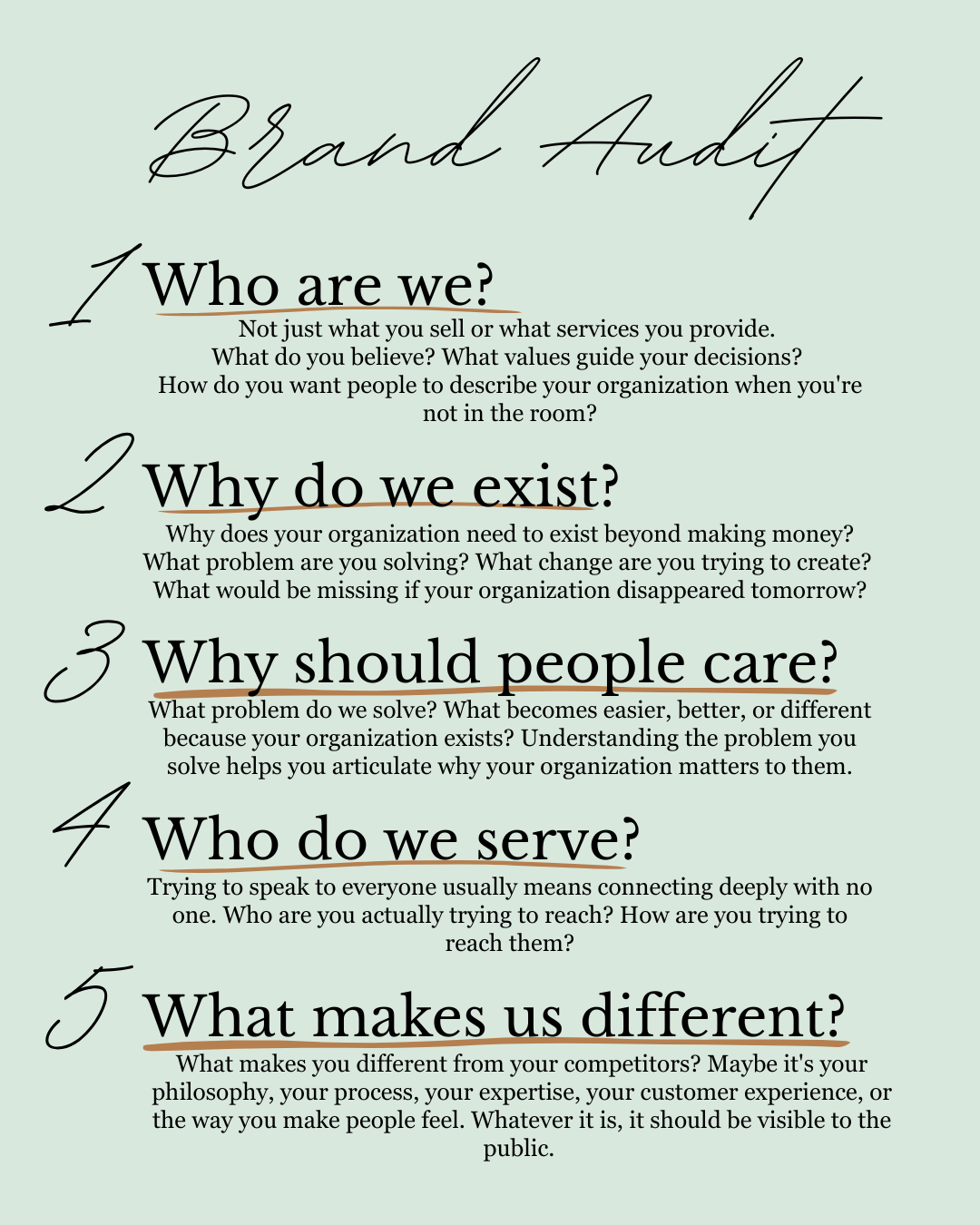
Every organization has a brand. The question is whether you're actively shaping it or letting everyone else define it for you. Strong branding starts with clarity about five fundamental questions.
A brand audit is a checkup on how well your organization understands, communicates, and delivers its brand. It looks beyond your logo and visual identity to compare who you say you are, who your employees believe you are, and who your customers experience you to be. The goal is to understand whether those three perspectives are aligned—and where they aren't.
Why Should You Conduct a Brand Audit?
Because you can't strengthen your brand if you don't know where the disconnects are. Your leadership team may have a clear vision for the organization, but that doesn't mean employees are communicating it consistently or customers are experiencing it the same way. A brand audit helps uncover those gaps, giving you a clearer picture of what's working, what's getting lost, and where your brand promise isn't matching the actual experience.
How Do You Conduct a Brand Audit?
Start by gathering stakeholders from across your organization (not just directors and executives!) and ask them to independently answer the five questions above. Then take those questions outside your organization. Ask your best clients, but don't stop there: talk to former clients, particularly those who recently ended their relationship with you, and prospective clients whose business you didn't win.
The goal isn't to get everyone to give you the same “correct” answer. You're looking for patterns, inconsistencies, and gaps between who you believe you are, who your employees believe you are, and who your customers experience you to be. Those gaps tell you where the real work needs to begin.
